What Are Flower Essences and How Can They Help You?
If you have come across flower essences and felt curious — but weren't quite sure what they actually are, how they work, or whether they might be relevant to your life — you are in the right place.
Flower essences occupy a unique space in the world of natural health. They are not essential oils. They are not herbal tinctures. They are not supplements in any conventional sense. They are something quieter, more subtle, and — for the people who work with them — often surprisingly precise.
This guide covers everything a curious beginner needs to know: what flower essences are, where they came from, how they work, what they are most used for, and how to begin exploring them yourself.
What are flower essences?
Flower essences are liquid preparations made from the blooms of specific plants, used to support emotional, psychological, and energetic wellbeing. They are taken in small doses — typically a few drops under the tongue or in water — and work not through biochemical action but through what practitioners describe as the energetic or vibrational quality of the flower.
This immediately makes them different from most things people encounter in natural health. They do not contain significant concentrations of plant compounds. They are not acting on the body the way a herb, a supplement, or a pharmaceutical does.
And yet, for the people who work with them regularly — and for the practitioners who use them clinically — flower essences consistently produce something real: shifts in emotional patterns, changes in how a person relates to their experience, a quality of ease or clarity or groundedness that was not there before.
They are subtle. They are not dramatic. And they tend to work best when a person is genuinely open to noticing what changes.
The origins of flower essences: Dr. Edward Bach
The modern flower essence tradition begins with Dr. Edward Bach, a British physician, bacteriologist, and homeopath who practiced in the early twentieth century.
Bach had a distinguished conventional medical career — he trained at University College Hospital in London, practiced at the Royal London Homeopathic Hospital, and made genuine contributions to bacteriology through his work on gut flora and chronic disease. But over time, he became increasingly convinced that conventional medicine was missing something essential: the role of emotional and psychological states in physical health.
His clinical observation was consistent and striking. Patients with similar emotional patterns — particular ways of relating to fear, uncertainty, grief, or exhaustion — tended to develop similar physical conditions, regardless of their diagnosis. And patients who shifted emotionally tended to improve physically, often in ways the clinical picture alone could not predict.
This led him, in the late 1920s and 1930s, to develop a new system of medicine. He left his London practice, moved to the English countryside, and spent years working directly with the plants — identifying specific flowers whose qualities corresponded to specific emotional states, and developing a method of preparation that would make those qualities available as medicine.
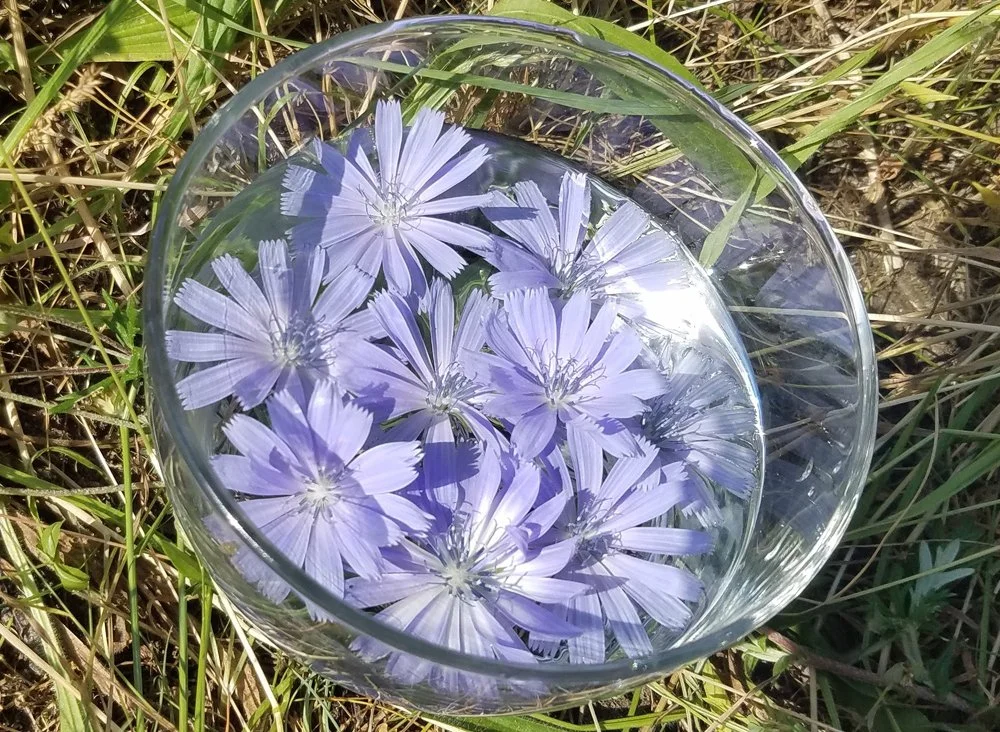
The preparation method he developed — floating fresh flower blooms in pure spring water in direct sunlight, then preserving the resulting water in brandy — became the foundation of what we now call flower essences.
By the time of his death in 1936, Bach had identified 38 flower remedies. He considered the system complete, and it remains the most widely known flower essence tradition in the world.
The 38 Bach Flower Remedies
Bach's 38 remedies are organized around seven categories of emotional experience.
Fear — including specific fears (Mimulus), vague unnamed anxiety (Aspen), fear of losing control (Cherry Plum), and over-concern for others rooted in fear (Red Chestnut).
Uncertainty — indecision (Scleranthus), seeking outside advice rather than trusting oneself (Cerato), discouragement (Gentian), hopelessness (Gorse), and lack of direction (Wild Oat).
Insufficient interest in present circumstances — living in the past (Honeysuckle), dreaming rather than acting (Clematis), deep exhaustion (Olive), and failure to learn from experience (Chestnut Bud).
Loneliness — proud self-sufficiency that keeps others at a distance (Water Violet), talkative loneliness that seeks connection through words (Heather), and sudden inexplicable loneliness (Impatiens).
Oversensitivity — sensitivity to change and transition (Walnut), inability to say no (Centaury), bitterness and resentment (Holly), and being overly influenced by others (Agrimony).
Despondency or despair — self-blame (Pine), feeling overwhelmed (Elm), and the exhaustion of those who have over-given for too long (Oak).
Over-care for the welfare of others — over-control (Vine), rigidity (Rock Water), criticism and intolerance (Beech), and the compulsion to correct (Vervain).
The most famous Bach remedy is Rescue Remedy — a combination of five flowers designed as acute support for shock, panic, and extreme stress. It is widely available in health food stores and is many people's first encounter with flower essences.
Beyond Bach: the broader world of flower essences
While Bach's system is the most widely known, it is far from the only tradition. In the decades since his death, practitioners and researchers around the world have developed essences from thousands of plants, drawing on the unique flora of their own landscapes.
The Flower Essence Society (FES), founded in California in 1979, has been among the most significant contributors to this expansion — developing a range of North American flower essences and a sophisticated framework for understanding how they work, drawing on decades of clinical observation.
Australian Bush Flower Essences, Alaskan Flower Essences, Himalayan Flower Enhancers, and numerous regional traditions have emerged from practitioners working closely with the plants of their own places.
The premise shared across all of these traditions is consistent: each flower carries a specific quality of intelligence or awareness, and that quality — when received through the prepared essence — supports the human being in accessing the same quality within themselves.
This is not the flower teaching you something external. It is the flower helping you remember something you already carry.
How do flower essences actually work?
This is the question that stops many people — and it deserves an honest answer.
The mechanism by which flower essences work is not fully explained by conventional biochemistry. Because the preparation process involves significant dilution, the final essence contains little or no measurable concentration of the original plant compounds. This places them outside the model by which Western medicine typically understands therapeutic action.
Flower essences are a form of vibrational medicine — in the same tradition as homeopathy, which has been in continuous clinical use for over 200 years. There are thousands of documented case studies showing both emotional and physical effects. And modern science has come to understand that the universe is, at its most fundamental level, frequency, energy, and waves. Flower essences work in that field — just as sound therapy works in that field. We may not know exactly how, but we can observe what they do.
I will tell you my own experience. The first flower essence I ever worked with was Indian Pipe — a rare and otherworldly plant, ghostly white, that grows in deep forest shade. I was in my herbalism training when I first received it, and something happened that I had not expected and could not explain away. My mind, my heart, my whole being knew that what I was experiencing was the flower essence. It connected me to something I can only describe as universal love — a felt sense, way beyond myself, that everything is connected, that I am held in a field of love and support. That moment is why I have been working with flower essences ever since, and why I bring them into everything I do.
That kind of experience is not unusual among people who work with essences attentively. It cannot be promised, and it cannot be manufactured. But it is available.
What are flower essences used for?
Flower essences are used primarily for emotional and psychological support. They are not often used to address physical disease directly, though practitioners frequently observe physical shifts as emotional patterns change.
The most common areas of use include:
Anxiety and fear — both specific named fears and the vaguer, free-floating anxiety that many people live with. Mimulus for known fears, Aspen for unnamed anxiety, Rock Rose for acute terror.
Grief and loss — Star of Bethlehem for shock and the aftermath of loss, Honeysuckle for living too much in the past, Sweet Chestnut for the depth of grief that feels without end.
Self-worth and confidence — Larch for lack of confidence, Cerato for the habit of seeking outside validation rather than trusting one's own knowing, Pine for the tendency toward self-blame.
Transitions and change — Walnut is one of the most used essences for major life transitions: moving, changing careers, ending relationships, navigating the shifts of midlife. It supports completing one chapter and beginning the next.
Emotional exhaustion and depletion — Olive for deep, bone-level fatigue. Oak for those who have kept going long past the point of rest. Centaury for those whose depletion comes from an inability to say no.
Decision-making and clarity — Scleranthus for indecision between two paths, Wild Oat for deeper uncertainty about direction and purpose, Cerato for those who know their answer but keep seeking confirmation from others.
Emotional dimensions of physical health — many practitioners use flower essences to address the emotional patterns underlying physical conditions. This is not a replacement for clinical care — it is a complementary dimension that addresses what clinical care often leaves unnamed.
How are flower essences taken?
Flower essences are typically taken as drops — either directly under the tongue, or added to a glass of water and sipped throughout the day. I recommend three drops, three times daily, though protocols vary.
A treatment bottle is a small dropper bottle prepared with spring water, a small amount of brandy as preservative, and the selected essence or combination of essences. A practitioner who selects your essences will typically prepare a dosage bottle specific to you, to be used over two to four weeks before reassessment.
Flower essences can also be added to bath water, applied topically to pulse points, or used in misting sprays. In clinical practice, the most common method remains oral drops.
They are considered safe for all ages, including children and animals. They are non-toxic, non-addictive, and do not interact with medications or other treatments.
How I work with flower essences
For me, flower essences are not selected from a chart of emotional keywords. I work with the living intelligence of each flower directly — through years of attentive relationship, meditative practice, and shamanic journeying with the plants themselves. That relationship informs not just which essence I choose for a client, but how I hold and offer it.
In clinical herbal consultations, I integrate flower essences alongside clinical herbal medicine — addressing both the physical patterns and the emotional dimensions that are almost always part of the same story. The two work together in a way that neither does alone.
In Flower Essence Shamanism, my signature practice — participants work with one flower essence across four sessions, not learning about it intellectually but meeting it directly through guided meditation, crystal singing bowls, and shamanic drumming journey. People experience the flower's medicine moving through their body, heart, and energy field in ways that description cannot replicate. It is, in my experience, one of the most direct and profound ways to receive what a flower essence carries.
How to begin with flower essences
If you are curious and want to start, here are honest and practical starting points.
Begin with Rescue Remedy. It is the most accessible entry point, widely available, and genuinely useful for acute stress and overwhelm. Many people who later develop a deep practice with flower essences began by noticing what Rescue Remedy did for them in a difficult moment.
Read Bach's original writing. His small book The Twelve Healers and Other Remedies is available free online and is one of the clearest introductions to the philosophy behind his system. Bach wrote simply and directly.
Choose one essence at a time. Resist the temptation to take everything at once. Choose one essence that speaks to a current and specific emotional pattern, take it consistently for two to four weeks, and pay genuine attention to what shifts. This is how flower essences are best learned — through slow, attentive relationship.
Keep a simple journal. Flower essences work subtly, and subtle shifts are easy to miss. A brief daily note on your emotional state, sleep, and the quality of your thoughts gives you something to look back on and recognize what has changed.
Consider working with a practitioner. A trained flower essence practitioner can offer what self-selection cannot: an outside perspective on your patterns, knowledge of the full range of essences, and the ability to combine them precisely. This is particularly valuable when the emotional picture is complex or when you are navigating a significant life transition.
Herbal Consultations and Flower Essence Shamanism with Gina
I am a Registered Herbalist (RH-AHG), Flower Essence Practitioner, and Shamanic Guide based in Jupiter, Florida. Flower essences are woven through everything I do — in clinical consultations, in the Flower Essence Meditation, and in The Remembering, my deepest personal work.
If you are ready to explore flower essences with guidance, I would be honored to work with you.
Herbal Consultations are available in-person in Jupiter, FL and via Zoom. Flower Essence Meditation meets weekly in Jupiter, FL
Frequently asked questions about flower essences
Are flower essences the same as essential oils?
No. Essential oils are concentrated aromatic compounds extracted from plants — they are used topically or aromatically and have direct biochemical effects on the body. Flower essences contain no significant concentration of plant compounds. They work through vibrational or energetic means rather than biochemical ones. They are taken internally as drops and are completely safe to ingest. Essential oils generally are not.
Are flower essences homeopathy?
Flower essences and homeopathy share the principle of working with highly diluted preparations and vibrational medicine, and both were developed within a similar philosophical tradition. They are distinct systems — homeopathy works primarily with physical and constitutional patterns using a wider range of substances, while flower essences work specifically with emotional and psychological states using flower preparations. Many people who respond well to one respond well to the other.
Do flower essences interact with medications?
No known interactions with pharmaceutical medications have been documented. Flower essences are non-toxic, non-addictive, and do not interfere with other treatments. The small amount of brandy used as a preservative in standard preparations is negligible — alcohol-free preparations using glycerin are available for those who prefer them.
How long does it take for flower essences to work?
Some people notice shifts within days. For others, changes emerge more gradually over two to four weeks of consistent use. Flower essences work subtly — the shifts are often noticeable in retrospect rather than in dramatic moments. Keeping a journal during the period of use helps you recognize what has changed.
Can I take more than one flower essence at a time?
Yes. Bach himself used combinations, and Rescue Remedy is itself a five-flower combination. Most practitioners work with combinations of three to six essences at a time, selected to address related aspects of the same emotional picture. Taking too many at once, however, can make it difficult to discern what is working.
Are flower essences safe for children and animals?
Yes. They are widely used for children, infants, and animals. They are non-toxic and non-addictive. For children and animals, they can be added to drinking water rather than taken directly.
What is the difference between a stock bottle and a treatment bottle?
A stock bottle is the concentrated essence as sold in health food stores. A treatment bottle is a diluted preparation made by a practitioner specifically for you — typically combining several selected essences in spring water with a small amount of brandy as preservative. Treatment bottles prepared by a practitioner for a specific person are generally considered more effective than using stock bottles directly, because the selection is individualized and the preparation is made with intention.
Gina Kearney, RH(AHG), is a Registered Herbalist, Flower Essence Practitioner, and Shamanic Guide based in Jupiter, FL. She offers Herbal Consultations and works with flower essences both individually and in the Plant Spirit Circle. To learn more or book an appointment, visit ginakearney.com.