
How to Begin a Living Practice With Plants (Without a Program or a Protocol)
Some mornings I boil water, pour it into a cup, and go outside to my garden.
I stand among the plants and I ask quietly, inwardly, the way you might ask a friend — who wants to be in my cup today.
Then I feel for the answer.
Something draws my attention. A particular plant seems more present than the others. I move toward it, spend a moment with it, and if the feeling holds, I pick a few leaves and add them to my water. The tea is different every time. Some mornings it's lemon balm, soft and bright. Some mornings it's rosemary, clear and steady. Some mornings something surprises me entirely.
What I receive each time is the feeling that nature sees me. That something in the living world is paying attention, is responsive, is quietly and consistently offering itself as support.
This is a living practice with plants — a relationship, reciprocal and alive, that began the moment I was willing to ask and then feel for the answer.
You already know how to do this. The question is simply whether you've been given permission to trust it.
What a living practice actually is
A living practice is a quality of attention brought to an ongoing relationship.
The plants have been here far longer than any human framework for working with them. They have their own intelligence, their own character, their own way of communicating — through sensation, through pull, through the quality of attention that arises when you are near them. A living practice is the cultivation of your ability to receive that communication. To notice. To feel. To trust what you feel.
The plants respond to that kind of attention — in ways you can feel in your body, ways that become clearer and more distinct the more you practice receiving them.
This is a capacity you were born with. Most of us were simply never taught to trust it.
How the relationship begins — and what it asks of you
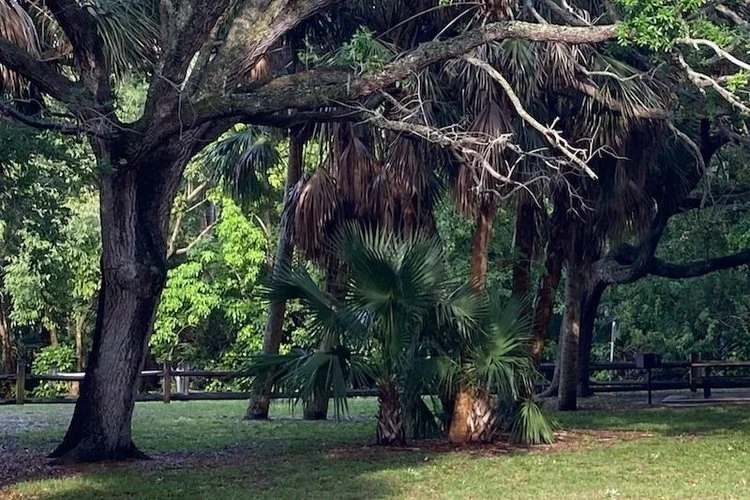
Years ago, I was sitting in a park near an oak tree. I was resting before a class I was about to teach — indoors, in a classroom, on herbal medicine. I was simply sitting quietly near this tree.
And the oak spoke to me.
Not in words, exactly. More like a clear knowing that arrived fully formed — a vision of a class held outside, under that very tree. People sitting on the ground, guided into stillness, feeling the wind, hearing the birds, sensing the heartbeat of the earth beneath them. The oak showing me what was possible when people were given permission to attune to the living world rather than observe it from a distance.
I wrote up the idea that same day and sent an email. The next thing I knew, there we were — a full class, sitting under the oak, truly feeling and connecting with nature. Many of them for the first time in their adult lives.
I knew then that this was just the beginning.
What that moment asked of me was willingness. To receive what was being offered and act on it. To trust the communication over the habit of waiting for permission from somewhere else.
That is what a living practice asks of you.
Show up. Be present. Feel. Trust what you feel.
What gets in the way of beginning
The most common thing I see is people approaching the plants the way they approach everything else in the wellness world — as a system to learn correctly before it counts.
They buy the books, learn the Latin names, research the contraindications. They build a home apothecary before they have spent a single unhurried hour simply sitting with one plant and noticing what happens.
The knowledge matters — I am a Registered Herbalist, I have spent a decade in clinical practice, and I hold deep respect for the clinical intelligence of plant medicine. And the knowledge and the relationship are two different things. The relationship has to run alongside the knowledge, informing it, grounding it, keeping it alive rather than academic.
A plant is a living being with a specific character, a specific frequency, a specific way of meeting you. Knowing that character changes everything about how you work with it. You learn that character the way you learn anything real — by spending time, paying attention, and allowing yourself to be surprised.
The practice begins the moment you go outside and genuinely pay attention.
The practical dimension — how to actually begin
Begin with one plant already in your life — something growing near where you live, something you already cook with, something that has caught your attention without you quite knowing why. The rosemary on your windowsill has as much to offer as the rarest botanical. The relationship lives in your willingness to be present with it.
Spend time before you study.
Sit near it. Touch it if it welcomes that. Notice its smell, its texture, the quality of its presence. Notice what arises in you — a feeling, a memory, a shift in your body. This is the beginning of the relationship.
Then study — and let the study deepen what you already felt.
When you turn to the clinical knowledge, read it through the lens of what you already noticed. Often what you sensed in presence and what the plant is known for are drawing from the same source.
Ask and feel.
Go to your garden with an open question. Ask who wants to be in your cup, or which plant wants your attention today, or simply stand among growing things and notice where your gaze is drawn. Then follow that. The feeling is the beginning of two-way communication. Trust it before you understand it.
Go outside before the day starts.
Before the emails, the decisions, the internal narration of the day — go outside. Even five minutes. Stand on the ground. Look at what is growing. Breathe. Let the living world be the first thing you receive in the morning. The plants are available every morning. They are simply there.
What the practice becomes over time
A living practice with plants deepens the way all real relationships deepen — through time, through attention, through the accumulation of moments that build trust between you.
What begins as a morning cup of tea selected by feel becomes, over time, a fluency. A knowing in the body of which plant belongs in which season of your life. A sensitivity to what the living world is communicating that becomes as natural as listening to a trusted friend.
The plants remember you — not the way a person remembers, but in the way a relationship has continuity. The oak you sat beside last autumn is still there this spring. The rosemary you have grown on your windowsill for three years has been in relationship with you for three years. These relationships compound. They deepen without effort, the way all genuine presence deepens things.
And slowly, without announcement, something shifts in how you move through ordinary life. You pause before reaching outside for an answer. The steady, clear, knowing part of you — the part that always knew — has simply been waiting for you to get quiet enough to hear it.
The plants teach this. Through relationship.
Frequently Asked Questions
Do I need to know anything about herbalism before I begin a living practice with plants?
The relationship itself begins the moment you bring genuine, unhurried attention to a plant and allow yourself to receive what's there. Knowledge deepens the practice over time, and many people find that the felt relationship comes first — you become curious about a plant you've been spending time with and want to understand it more fully. That sequence, feeling first and study second, tends to produce a much more alive relationship with the plant than study alone.
What if I live in a city and don't have access to a garden?
A single plant on a windowsill is enough to begin. One pot of rosemary, one lemon balm in a container on a balcony, one cutting rooted in a glass of water on your kitchen counter — the relationship is available wherever the plant is. Parks, street trees, weeds growing through pavement — the living world is present in cities in ways we often walk past without noticing.
How is a living practice different from enjoying plants or being outside?
The difference is intentional, reciprocal attention. A living practice begins when you go outside with an open question, feel for a response, and begin to notice that the communication is genuinely two-way. That shift can happen quietly, in an ordinary moment. It requires only the willingness to take the response seriously.
How long does it take to develop this kind of sensitivity?
Many people feel something on their very first intentional sit with a plant — a warmth, a shift in the quality of their attention, a sense of being met. That is the beginning. The sensitivity deepens with consistent practice. The living world is responsive from the first moment you bring genuine presence to it. Trust what you feel early. The early impressions are often the most accurate.
Is Flower Essence Shamanism a good next step once I've begun a living practice?
Flower Essence Shamanism is a natural deepening of exactly this kind of living relationship with plants and the natural world. Where a daily practice with herbs builds the felt sense of two-way communication with the living world, Flower Essence Shamanism takes that communication deeper — using the frequency of a flower essence as a portal into direct relationship with the intelligence of the living world. The daily practice you build at home creates the foundation. The flower essence opens a door within that foundation into something larger. I offer the Flower Essence Shamanism Series for exactly this deepening — a place you return to, in its own time, when you feel ready to go further.
The practice is already available to you
The plants are meeting you already — in the garden, in the park, in the rosemary on your windowsill, in the oak you walk past every morning on your way somewhere else.
Go outside. Choose one plant. Spend time with it before you study it. Ask who wants to be in your cup, or in your day, or in your attention — and feel for the answer. Trust what arrives.
The living world has been waiting for this conversation. Your presence is all it has ever asked for.
If you want company as you begin — The Monthly Gathering is a live session each month where we work with herbs, flower essences, and the living world together, unhurried. Join the gathering →
And if the practice is already alive in you and you feel called to go further, the Flower Essence Shamanism Series is the next door. It will be there when you are ready.
—-
Gina Kearney is a Registered Herbalist (AHG), Flower Essence Practitioner, and Shamanic Guide based in Jupiter, FL. She has been in clinical practice for over a decade and is trained and mentored by Sandra Ingerman, world-renowned shamanic teacher and author. In September 2026, she will co-lead a live global class on Flower Essence Shamanism with Sandra Ingerman on The Shift Network. She works with clients in-person in Jupiter, FL and via Zoom.